One of the most common misconceptions we hear is the assumption that machining plastics is easier than machining metals. We understand the mix-up; at first glance, softer materials like nylon or UHMW seem simpler to cut through.
In reality, machining plastics introduces its own set of challenges.
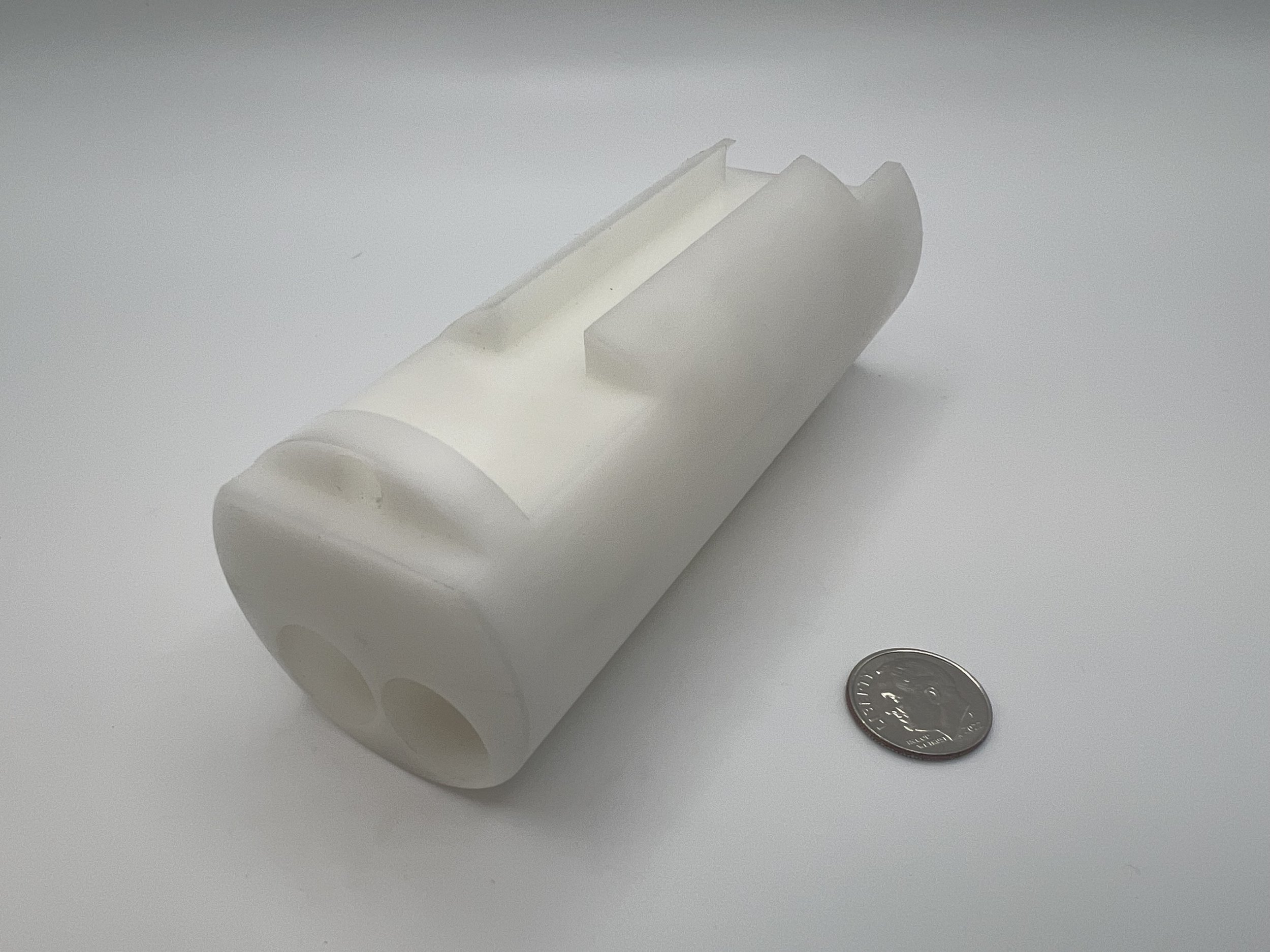
At KCSP Machine, our team has deep expertise in machining plastic materials such as acetal, nylon, and UHMW, among others. Through careful control of cutting speeds, tooling, and process strategies, KCSP Machine delivers reliable precision machined parts while avoiding the common pitfalls associated with these materials.
Understanding the Role of Material Properties
Surface speed and tooling strategy
Every material we machine comes with recommended cutting speeds known as surface feet per minute (SFM). These speeds help determine how fast a cutting tool should run to produce the best results.
For instance, machining steel with carbide tooling might run around 600 SFM. Meanwhile, plastics will require an entirely different setup.
Softer materials like nylon can be machined at higher speeds, but if tools run too fast, they can generate heat that softens or melts the material, resulting in surface issues or dimensional inaccuracies. This is why our team carefully balances speeds and feeds, ensuring clean cuts while preventing overheating.
Tool geometry matters
Tool selection is another important factor.
In many cases, we use inserts designed for aluminum when cutting plastics. These inserts have sharper cutting edges and larger chip breakers, which allow them to slice through soft materials more cleanly. Sharper tools reduce friction and heat buildup, two major causes of problems we see when machining plastics.
A Common Challenge: Chip Control
Preventing “bird nesting”
Metals break into chips fairly easily, but plastics often create long, stringy shavings. When these strings wrap around tools or parts, they create what machinists call “bird nesting.” Materials like nylon and UHMW are especially prone to this because they are extremely soft and flexible.
This buildup can interfere with the machining process or even damage parts if the material overheats. In some cases, operators must actively manage chip removal using air blasts and careful monitoring. Our experience with other high-production processes helps us anticipate and manage these challenges.
Advanced technology solves this problem
To combat chip control issues, our shop offers Swiss machining services with low-frequency vibration (LFV) technology. This feature oscillates the cutting tool during machining, repeatedly engaging and disengaging the material. That motion encourages chips to break instead of forming long strings.
This technology is especially valuable when machining difficult plastics. When we anticipate bird nesting issues, we often route those parts to Swiss machines equipped with LFV technology.
Plastic Machining Requires Design Awareness
Elasticity changes the rules
Plastics behave very differently from metals when it comes to elasticity. For example, when threading a plastic hole, the material can stretch slightly as the tap enters. Once the tool exits, the material relaxes back into shape, sometimes making the threads tighter than expected.
To compensate, machinists may need oversized taps or specialized tooling to achieve the correct final dimensions. Without experience in precision machining, these behaviors can lead to failed inspections or inconsistent parts.
Wall thickness and dimensional stability
Plastic parts can also shift dimensionally depending on wall thickness. When the inside diameter and outer diameter are too close together, the material may flex or collapse slightly during machining. Understanding these behaviors is essential when producing plastic components.
Temperature and Environmental Factors
Plastic parts are also sensitive to temperature changes.
KCSP Machine operates in a climate-controlled environment, ensuring dimensional stability during machining. However, the environment where a part is ultimately used can also affect its performance. For example, a part produced in our shop may later operate in a deep freeze or a high-temperature industrial environment. These temperature differences can cause plastics to expand or warp.
Because of this, our team works closely with customers to understand the part’s final application and environment.
Supporting a Wide Range of Plastic Applications
KCSP Machine manufactures plastic components for a variety of industries, including:
Medical and surgical equipment
Oil and gas electronics housings
Automation rollers and bushings
Food industry equipment
Industrial machinery
If you’re looking for a partner who understands the nuances of plastic machining, we’re ready to help. Request a quote today, and let’s discuss your next project.