A machine shop operating for over 80 years accumulates a lot of knowledge. While a great deal of that gets captured in our inspection plans and other systems, much of it lies in the experience of the people who have spent years on the shop floor.
At KCSP Machine, we’re working to make sure that knowledge continues moving forward. That means cross-training employees and giving newer team members opportunities to take on increasingly complex responsibilities.
Our Plant Manager, Rob, plays a major role in that effort, helping employees develop their skills while learning how each person learns best.
Today’s Cross-Training Efforts Yield Tomorrow’s Success
A manufacturing business can become vulnerable when too much knowledge is concentrated with one person. What happens when that person is out sick? What happens when they retire? Or when the shop adds a new machine that requires a completely different skill set?
Cross-training helps KCSP Machine prepare for those situations.
Building Business Continuity
Our goal is to keep KCSP Machine strong for another 80 years. That means thinking beyond today's production schedule and instead developing the people who will eventually take on greater responsibility throughout the company.
Cross-training gives our crew members exposure to different machines and processes. It also creates opportunities for experienced employees to pass their expertise on to the next generation. That knowledge transfer is especially important as we continue investing in new machinery and automation.
Putting Knowledge Into the System
People are an important part of this transfer of knowledge, but systems play a role, too. Our ERP implementation has helped us move information regarding setups, quality, tooling, and more into a centralized system. This makes important information accessible beyond the person who originally learned or developed it.
By reducing single points of failure throughout the organization, we’re ultimately creating better outcomes for our customers. A cross-trained team is better positioned to keep production moving when circumstances change.
Rob's Approach to Training Starts on the Machine
There isn't one training method that works for every machinist. That’s why Rob starts by getting new team members onto a machine and watching how they approach the work. As he puts it, “I can tell a lot about a person by how they run the machine and check the parts.”
That hands-on observation gives him a starting point that guides what training will entail going forward.
Finding Strengths and Areas for Growth
Everyone brings a different combination of experience and natural abilities to the shop floor. Some people are mechanically inclined or have strong programming experience. Others may need more time to become comfortable with certain equipment or processes. Rob looks at those strengths and weaknesses to determine where an employee can develop next.
He also pays attention to how someone approaches a problem. Are they willing to figure something out? Do they ask questions? How do they work with other people? Are they receptive to feedback? Technical skills can be developed over time, but attitude determines whether or not someone will be truly successful in our industry.
Finding the Right Way to Teach Each Person
Rob has a simple way of describing the different approaches people take to learning: “Which way do they go around the bush?” Do they go one direction, or another, or do they jump over it? In other words, there are several ways to solve a problem. Rob's job is to figure out which approach makes the most sense for the person he's training and then build from there.
Training also happens at different speeds. Giving people enough time to understand what they're doing, while continuing to challenge them, is an important part of the process.
Putting Cross-Training Into Practice
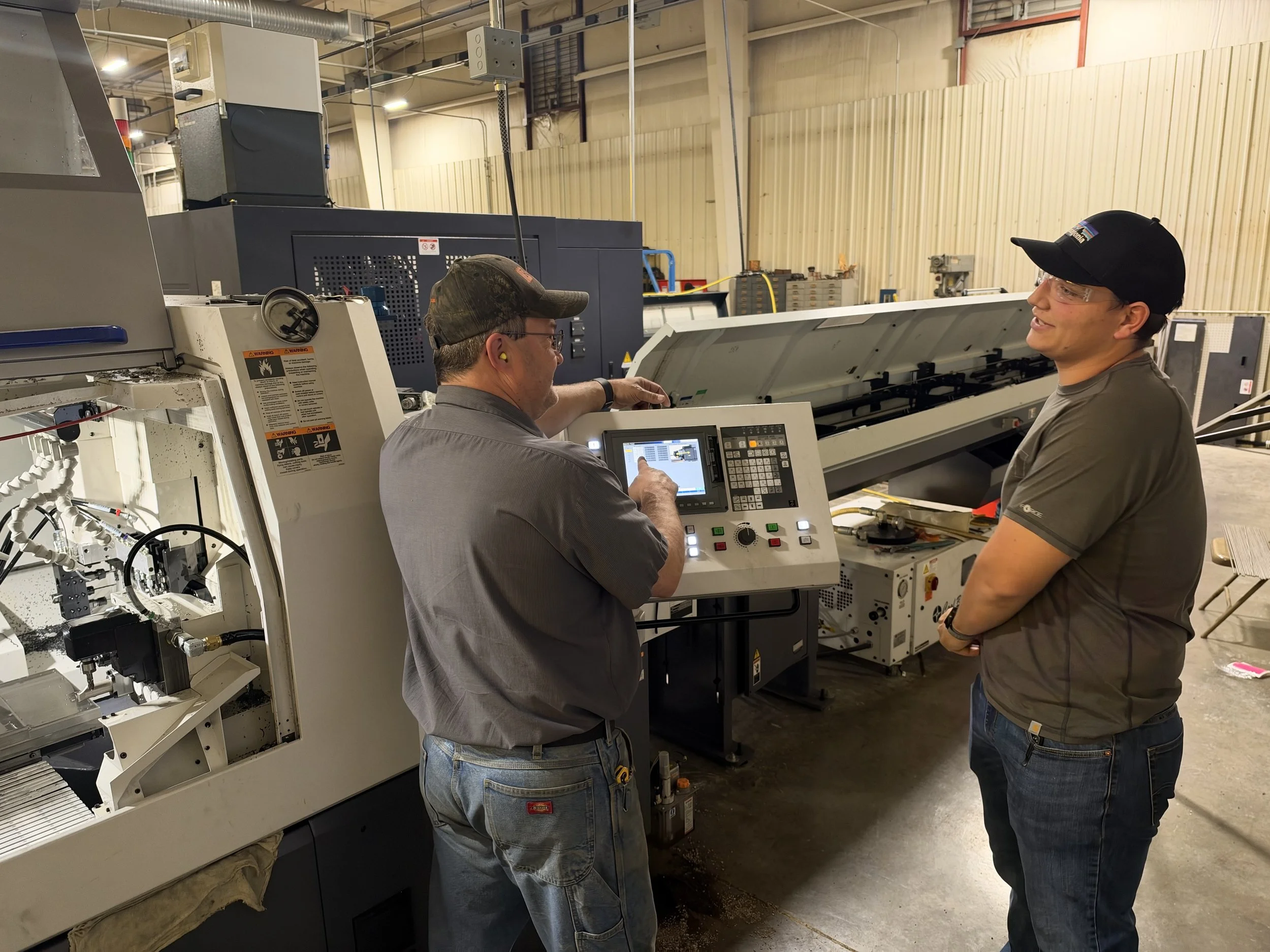
One recent example is Kale, who joined KCSP Machine at the end of August after working for another manufacturing company in the Kansas City area. Kale came in with CNC lathe experience and familiarity with Mastercam, giving him a strong foundation in both machining and programming.
After seeing his mechanical aptitude and existing skills, the team identified him as a good candidate for cross-training on a Swiss machine.
Rather than putting him on the machine and expecting him to figure everything out, Rob has been gradually introducing him to the equipment and teaching him what to watch for. For someone with Kale's mechanical background, much of the training can follow a watch-then-do approach. Rob demonstrates a process, explains what to look for, and then gives Kale the opportunity to perform it himself. Then, as his experience grows, so will his responsibility.
Passing Knowledge Forward
Cross-training is ultimately about creating continuity. As experienced machinists share what they've learned, newer employees gain opportunities to take on more responsibility. As employees develop new skills, that knowledge can be shared with others. And as information moves into our ERP system, critical processes become easier to access and repeat. It's an ongoing cycle of learning and teaching alongside building the systems.
The machines will continue to change. Our capabilities will continue to evolve. New employees will continue to join the team. Our responsibility is to make sure the knowledge, skills and systems needed to keep the work moving forward are growing right alongside them.
Looking to partner with a precision machine shop that’s equipped for the future? Request a quote to partner with KCSP Machine.